
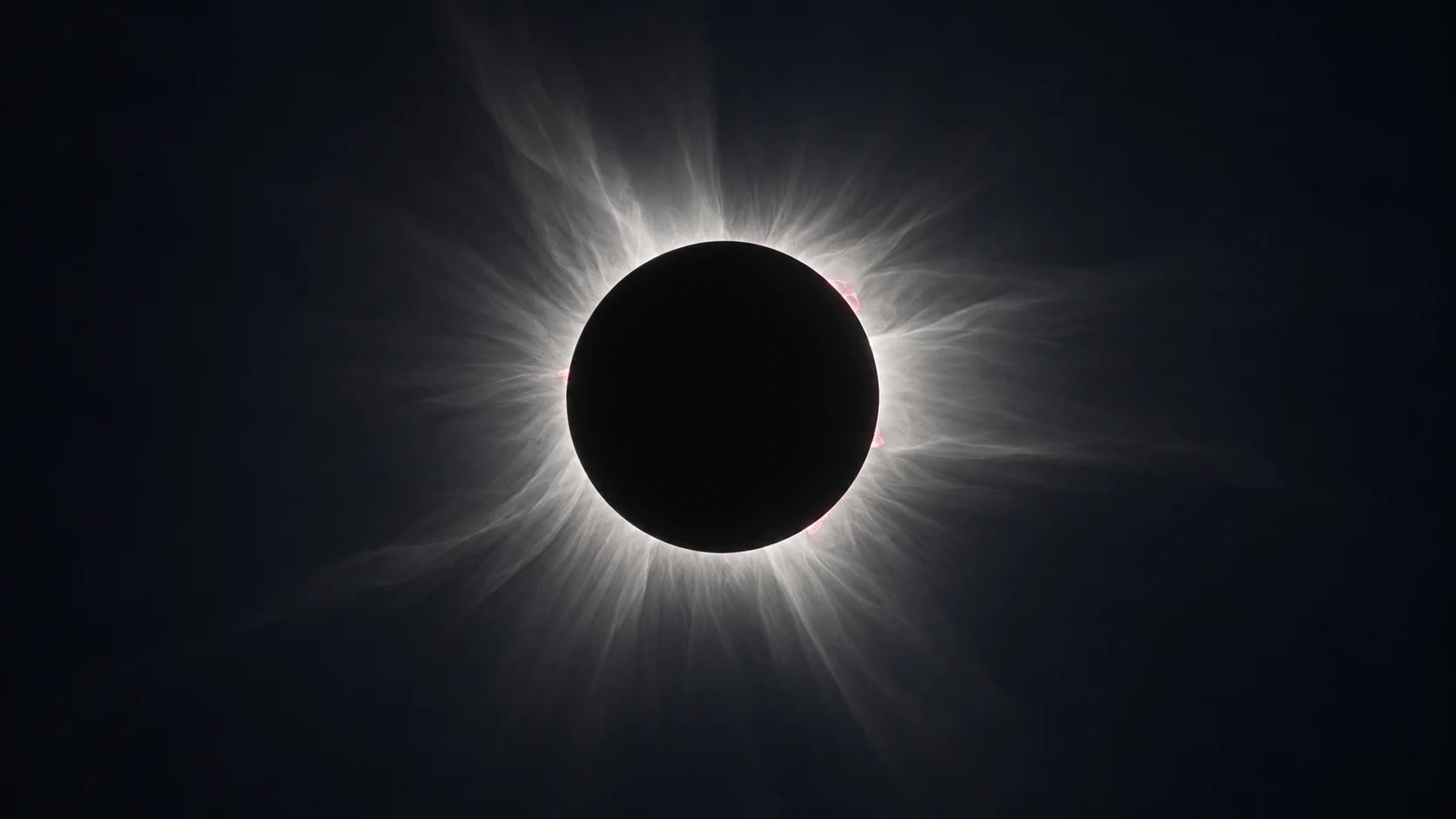
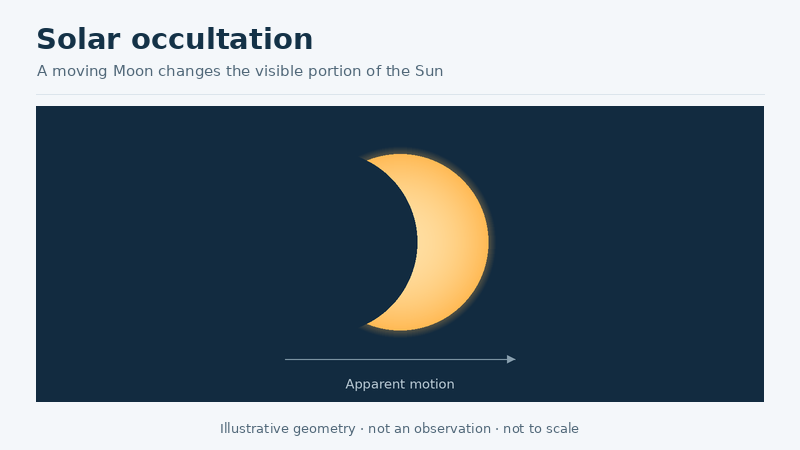
Begin with the surface energy budget
Less incoming solar energy changes the energy available to heat the ground, evaporate water and support rising air. The response depends on the surface: a dry field, wet soil, forest canopy and ocean do not store or exchange heat in the same way. Wind, clouds and the surrounding weather continue evolving during the eclipse.
The book therefore asks researchers to measure radiation, surface temperature and air temperature separately. A rapidly cooling surface does not imply an identical temperature change throughout the atmosphere. Timing matters too: different variables can respond and recover at different rates.
Less sunlight does not mean more cloud
Trees and colleagues’ 2024 study combined corrected satellite observations with large-eddy simulations. It found that shallow cumulus over cooling land could diminish during eclipses as the supply of rising warm air weakened. This is an important counterpoint to any simple claim that shadowing necessarily creates cloud or rain.
Chapter 2 uses eclipse observations to motivate a more careful chain of questions. What happened to surface heating? Did buoyant turbulence weaken? Was moisture available? Was there sufficient lifting and cloud development? The response must be explained through those linked processes, rather than inferred from cooling alone.
A natural eclipse is a benchmark, not a scale model
A lunar shadow moves across the landscape. A proposed engineered shadow might remain over one area or follow a programmed route. Extending duration could change the importance of heat storage, horizontal temperature gradients, ventilation and recovery. A successful eclipse simulation would not automatically validate that longer, differently shaped perturbation.
The proposed research pathway uses historical eclipses to challenge models against real responses. Comparisons would need untreated reference locations, matched weather conditions, calibration records and tests on events not used to tune the model. The useful question is whether the model reproduces the sequence and its uncertainty—not whether an animation looks plausible.
- Measure the forcing as well as the response.
- Keep land, sea and cloud regimes distinct.
- Report lag, recovery and conflicting observations.
- Reserve claims about artificial shadowing for evidence that actually tests it.
Sources & further reading
These sources establish background context. They do not certify the ASES proposal or demonstrate its proposed applications.
ASES remains a research proposal. Atmosfrustology is the author’s proposed framework. No operational climate-control capability is established by this website.