
Read according to the question
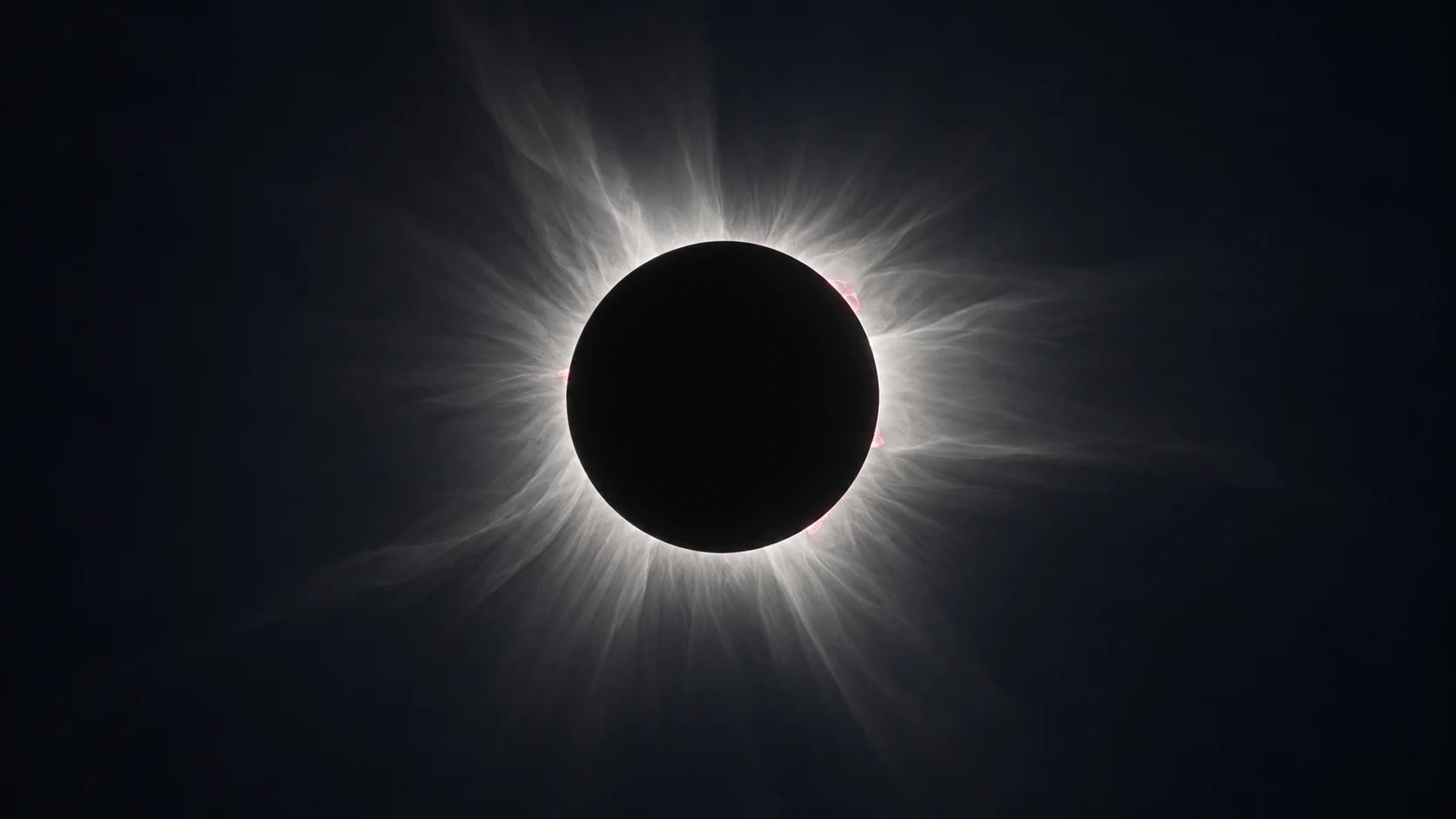
For geometry, begin with NASA’s eclipse explanation and Sun fact sheet. For cloud response, use the original Trees et al. study. For modelling, read the official WRF documentation. For research governance, consult the National Academies report.
Natural-eclipse observations can test aspects of atmospheric models; they do not establish that a sustained engineered shadow is feasible or beneficial.
Keep source types separate
The book explains the author’s proposal. Independent studies report observations or model results within their own scopes. This website’s energy and geometry examples are transparent calculations under stated assumptions.
Check the original method, the setting, the uncertainty and the conditions under which a result applies. A source about natural eclipses should not be quoted as proof of an ASES field installation.
Sources & further reading
- NASA · Eclipse geometry
- NASA · Sun fact sheet
- NASA · Insolation during the 2024 eclipse
- Trees et al. (2024) · Eclipse-related cloud response
- National Academies · Reflecting Sunlight (2021)
- NSF NCAR · WRF model documentation
- NOAA · Layers of the atmosphere
- NASA · Balloon program capabilities
- NOAA · Upper-ocean conditions and hurricanes
These sources establish background context. They do not certify the ASES proposal or demonstrate its proposed applications.
ASES remains a research proposal. Atmosfrustology is the author’s proposed framework. No operational climate-control capability is established by this website.